
Single botanical
One Latin name on the panel. Often a stated milligram amount per serving on the front, which makes two products in this shape directly comparable side by side.
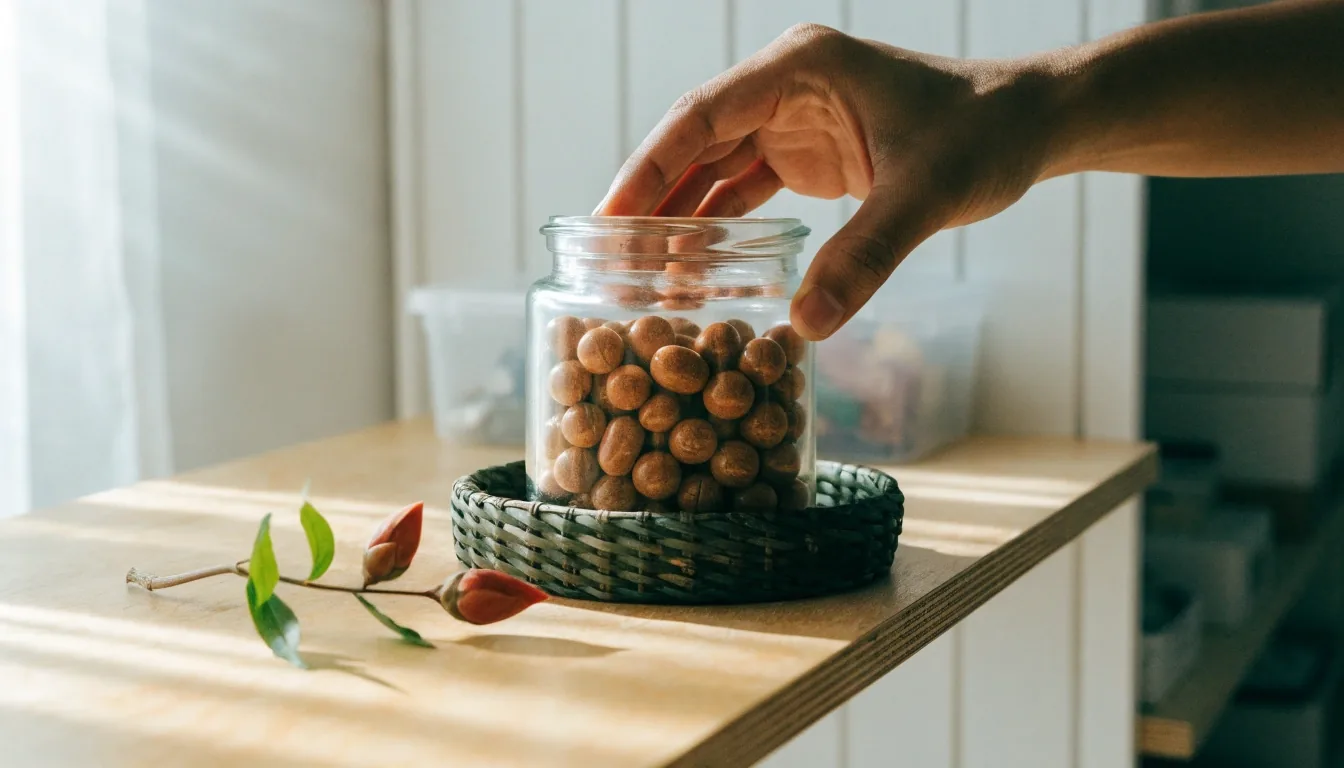
Botanical ingredient guide
Panax ginseng, Serenoa repens, Eurycoma longifolia. This page decodes the plant names that sit on herbal capsule labels so you can tell one formula from another before you buy.
Why the shop shelves stall
The herbal capsule shelf is where most shoppers slow down. The ingredient lists are in Latin, the plant names are unfamiliar, and two products can look identical while containing entirely different things.
This page is a decoder. It covers the botanicals that appear most often in men's formulas sold in Indonesia, explains how herbal capsules differ from standard multivitamins, and shows you what to look for when a label lists five plants in one blend. If you are still building a routine, the men's vitamin formulas guide covers the nutrient side of the shelf.
The recurring names
If you learn these five, you can read the majority of herbal capsule labels on Indonesian shelves. The Latin name is the reliable identifier; the common name is only a convenience.
Panax ginseng Ginseng The most widespread botanical in the group, appearing in multi-ingredient formulas such as NATURELINE Men's Health Kapsul.
Eurycoma longifolia Pasak bumi The local favourite and the botanical you will meet most often in Indonesian-made herbal products.
Serenoa repens Saw palmetto Turns up both inside blends and as a standalone capsule, as with GNC Men's Ultra Saw Palmetto Formula.
Lepidium meyenii Maca root Anchors single-ingredient capsules such as Solaray Maca Root 525mg, where the front panel states the amount.
Ginkgo biloba Ginkgo Appears mostly inside blends rather than on its own, often listed next to ginseng.
Epimedium Horny goat weed Listed on imported formulas and common enough that GNC sells a standalone version through its Indonesian retail.
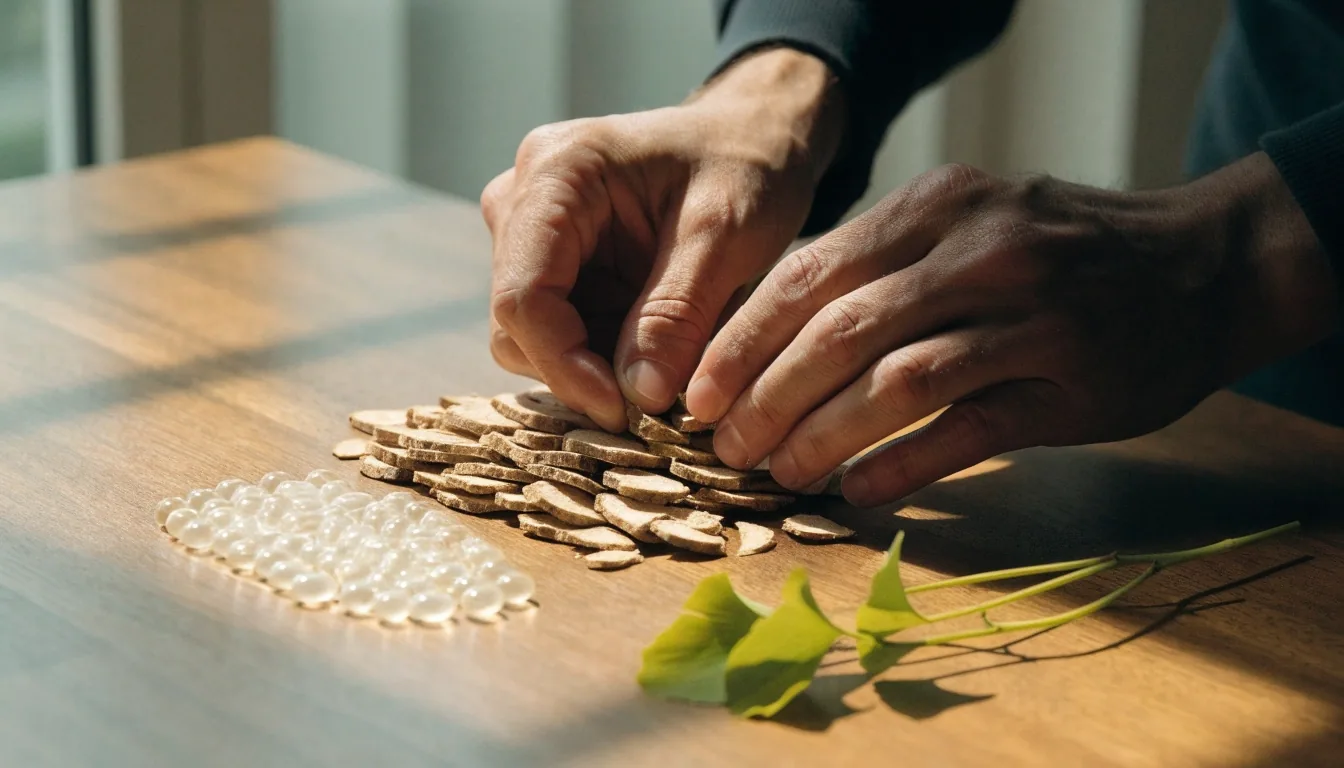
Panax ginseng, Serenoa repens, Ginkgo biloba. The Latin on a supplement label isn't decoration. It's the standardised name that lets a maker identify a plant precisely, across languages and regions.
Common names create confusion. "Ginseng" can describe several different plants depending on where you are standing, and a market name can drift between regions and generations. The Latin name doesn't drift. For a shopper, this is useful rather than academic: two products that both list Serenoa repens are talking about the same botanical, even if one bottle prints saw palmetto underneath and the other never mentions the common name at all.
It also tells you when two shelves are actually the same shelf. When an imported blend and a locally packed blend share three Latin names, you are comparing amounts and formats, not different plants.
Names you can expect to see together on one panel
Amounts per plant usually stay off a blend panel. Note which names repeat across the products you are weighing — the overlap is often more informative than the length of the list.
Structure of the shelf
This is the main structural split on the shelf, and it decides how much you can actually verify before buying.
A single-ingredient capsule contains one botanical and usually states its amount on the front panel. You can read the number, compare it against the neighbouring bottle, and reason about what you are taking.
A multi-botanical formula stacks several plants, and the amounts per plant are often not published individually. That doesn't make blends worse. It makes them harder to compare, because you can see what is inside but not how much of each. Decide first whether you want one ingredient you can reason about, or broader coverage you will have to take more on faith.
One Latin name on the panel. Often a stated milligram amount per serving on the front, which makes two products in this shape directly comparable side by side.
Several plants grouped on one line. What you can still compare: the number of botanicals, whether any single one is highlighted with its own amount, the serving size, and whether the brand publishes more detail elsewhere.
If botanical count, highlighted amounts, serving size and published detail all line up, two formulas are close substitutes. From there you compare format and price, not plants.
Standard multivitamins are built around nutrients with established reference amounts. Herbal capsules are built around plant extracts, which don't have that kind of shared reference point.
That single difference explains most of what you see on the labels. A herbal formula also tends to carry a smaller daily serving than a broad multivitamin, partly because there is no vitamin and mineral list to accommodate.
Vitamin and mineral formulas
Herbal capsule formulas
Neither layout is more honest than the other. They are different product types describing different things, and the panel shape is your first clue about which one you are holding. Our evaluation criteria set out how we treat both when scoring a label.
Some labels note that an ingredient is a standardised extract, or give a ratio such as 10:1. This is the maker telling you the plant material was concentrated. It is a labelling detail worth noticing, because it separates a concentrated extract from plain powdered plant.
It doesn't tell you the final amount in the capsule, though, unless the label also states milligrams per serving. Treat the ratio as one useful signal among several, not as a complete answer. A ratio with no milligram figure is a partial statement; a ratio with a milligram figure is something you can line up against the bottle next to it.
What a ratio does say
The plant material behind that line was concentrated during production, rather than simply milled and packed.
What it does not say
The final amount in the capsule. Without milligrams per serving, the ratio alone cannot be compared against another product.
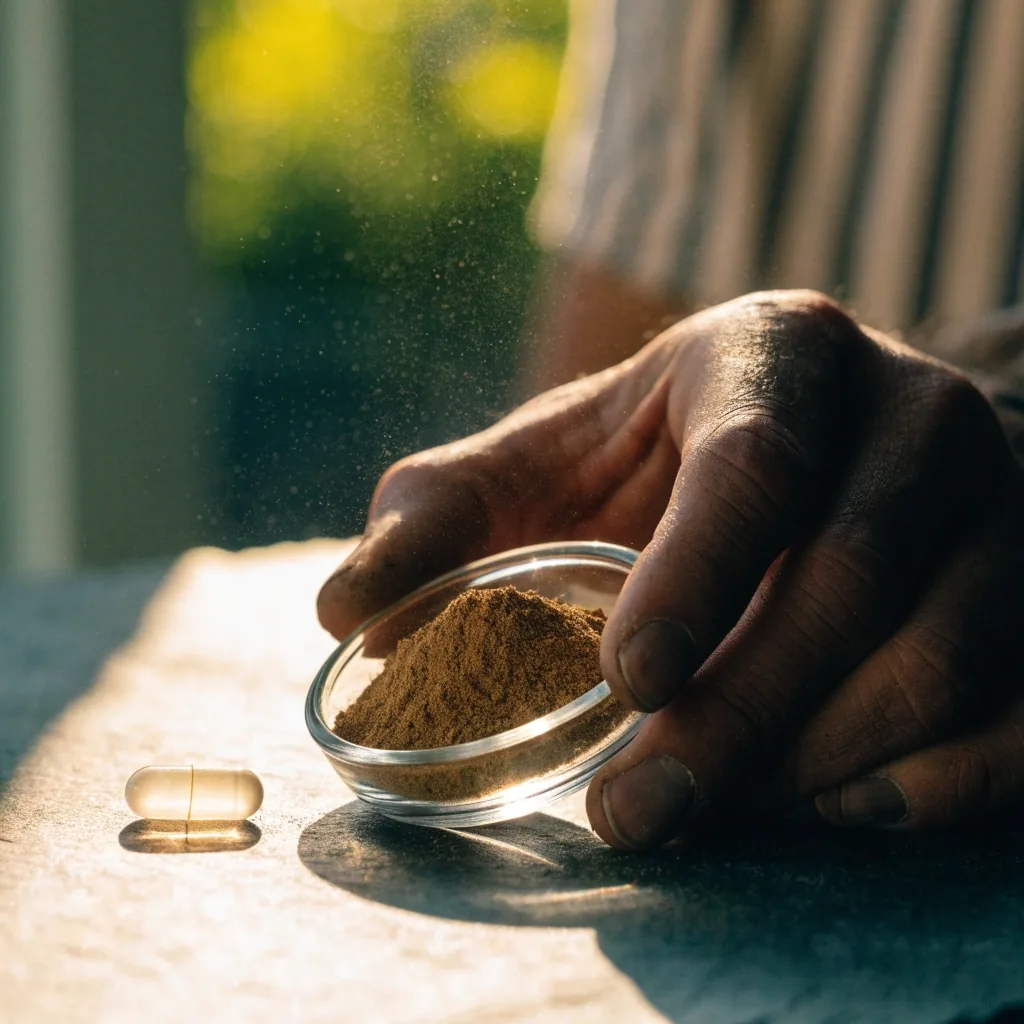
A blend listing five plants tells you which botanicals the brand chose. It usually will not tell you how much of each one you are getting. That is the central limitation of this sub-category, and it applies to imported and local products alike.
It is permitted to group ingredients into a combined blend line, and many brands do. That limits comparison, which is why our evaluation treats labelling detail as a factor rather than a footnote.
If a blend is what suits your routine, the practical next step is to compare the ones that publish the most detail, then check the format and serving size against the rest of your shelf. If broad daily nutrient coverage matters more to you than a single plant, the vitamin formula guide and the energy and endurance formulas cover the other two shapes on the shelf.
Naming conventions in this category are set by labelling rules, not by our preferences. The five checks above are the ones that change what you can compare between two bottles on the same day.
No. They refer to the same plant. Latin is the standardised identifier; the common name is there for readability.
They are different product types built around different things, nutrients in one case and plant extracts in the other. We describe both and explain how their labels are structured; we don't make comparisons about effects.
It's permitted to group ingredients into a combined blend line, and many brands do. It limits comparison, which is why we treat labelling detail as a factor in our evaluations.
That depends on what you want to read off the label. A single-ingredient capsule usually tells you the amount; a blend usually tells you the selection. If you are still building a routine, start with whichever detail you are prepared to check every time you restock.
Herbal capsules are one shelf. The other two have their own label logic, and comparing across all three is how most people settle on a routine that fits what they prepare and when they take it.
About this guide
SehatPria is an editorial resource for readers in Indonesia comparing natural supplements for men, men's vitamin formulas and other healthy lifestyle products by ingredient profile, serving format and suitability. We read labels and explain what is printed on them. We do not sell the products and we do not give advice about effects.
If a label on this page raises a question about your own situation, speak to a qualified health professional before you change anything in your routine.
Editorial desk
Jl. Jend. Sudirman No. 5, Sidomulyo, Samarinda, 75117
Monday–Friday, 09:00–18:00
Telephone +62 541 7454 2633 or email [email protected].